
Introduction
Marketing helps a business grow and reach more people. It allows businesses to tell customers about their products or services, build brand awareness, and attract new customers. Today, businesses use different marketing methods to promote their products and increase sales. Whether you run a small business, a startup, or a large company, marketing helps you reach potential customers, promote your products or services, and build brand awareness. However, marketing methods have changed significantly over the years.Today, businesses use both digital and traditional marketing to reach more people and promote their products or services.
What makes digital marketing different from traditional marketing? And which one should beginners, small businesses, and growing brands choose?
In this beginner’s guide, we will explore the meaning of digital marketing and traditional marketing, their key differences, advantages, disadvantages, and real-world examples. By the end of this article, you will understand how both marketing methods work and how to choose the right strategy for your business.
What Is Digital Marketing?
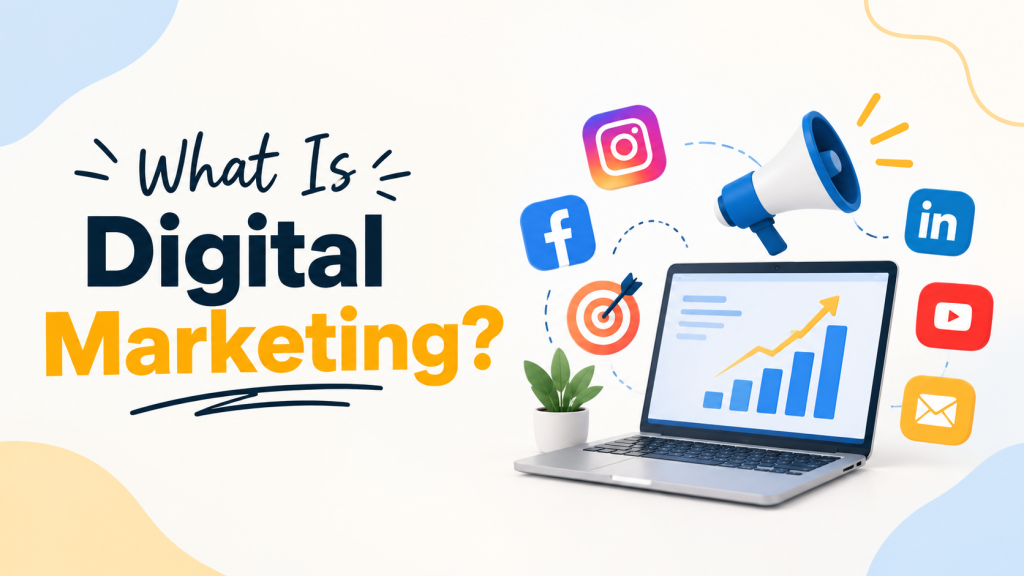
Digital marketing is a way of promoting a business, product, or service through the internet. It includes different methods such as social media posts, websites, search engines, emails, and online advertisements. These methods help businesses share information about what they offer and connect with people who may be interested in their products or services.
Today, many people use the internet to search for information, compare products, and discover new brands. Digital marketing helps businesses reach these people online and make it easier for potential customers to learn about their products or services.
Types of Digital Marketing
1. Search Engine Optimization (SEO)
Digital Marketing vs Traditional Marketing: Search Engine Optimization (SEO) helps websites rank higher in search results and attract organic traffic without paying for every click. For example, a digital marketing academy can publish a blog about the best digital marketing courses for beginners to reach people searching on Google. Unlike traditional marketing methods such as newspapers and billboards, SEO helps businesses connect with online audiences and build long-term visibility.
2. Social Media Marketing
Social media marketing is a digital marketing strategy that helps businesses connect with their target audience through platforms like Instagram, Facebook, LinkedIn, and YouTube. By sharing engaging posts, reels, videos, stories, and other creative content, businesses can increase brand visibility, interact with customers, and build stronger relationships with their audience.
3. Search Engine Marketing (SEM)
Search Engine Marketing (SEM) is a digital marketing technique that helps businesses promote their websites through paid advertisements on search engines like Google. It allows businesses to reach potential customers when they search for relevant products, services, or information online.. Businesses can run Google Ads to display their advertisements when users search for relevant products or services.
4. Content Marketing
Content marketing focuses on creating useful and informative content to attract and engage a target audience. Blog posts, videos, infographics, guides, and educational articles are common examples.
5. Email Marketing
Email marketing allows businesses to communicate directly with subscribers through newsletters, promotional offers, updates, and personalized messages.
6. Affiliate Marketing
Affiliate marketing is a strategy in which individuals or publishers promote another company’s products and earn a commission when qualifying sales or other agreed actions occur.
Advantages of Digital Marketing
Digital marketing offers several benefits to businesses:
- Global reach: Businesses can connect with audiences across different locations.
- Cost flexibility: Campaigns can be started with different budget levels.
- Targeted advertising: Advertisements can target audiences based on factors such as location, interests, and behavior, depending on the platform.
- Measurable results: Tools can track website visits, clicks, leads, conversions, and other performance indicators.
- Customer engagement: Businesses can interact with customers through comments, messages, email, and other digital channels.
- Quick optimization: Marketers can adjust campaigns based on performance data.
Disadvantages of Digital Marketing
Despite its many benefits, digital marketing also comes with certain challenges that businesses need to overcome.. Online competition can be intense, and businesses need to produce valuable content consistently. Search engine ranking factors and social media algorithms can evolve over time, which may affect how content appears to users online.. Paid advertising can become expensive when campaigns are poorly managed. Additionally, digital marketing requires knowledge of different tools, platforms, analytics, and online customer behavior.
What Is Traditional Marketing?
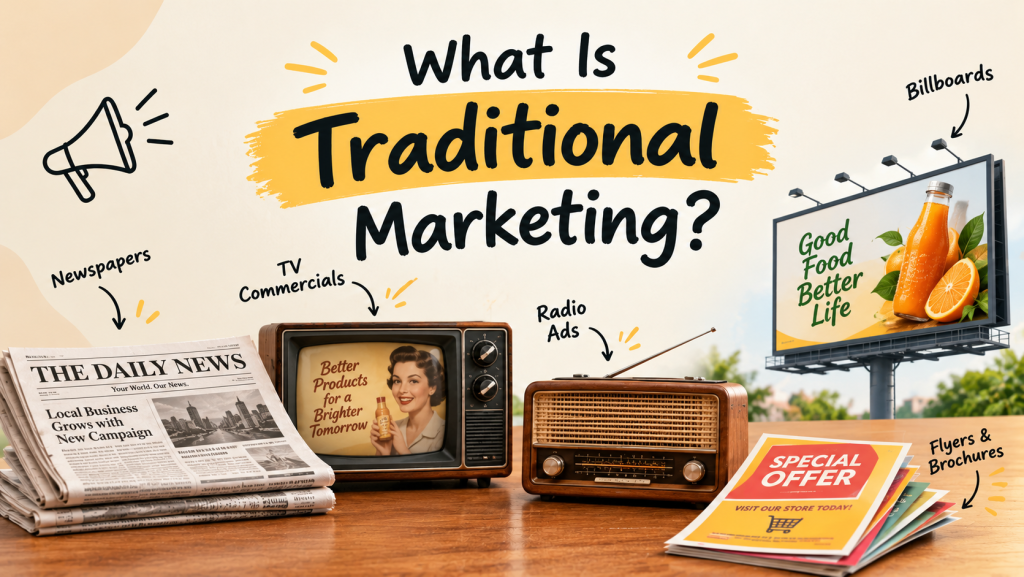
Traditional marketing refers to promotional methods that do not primarily depend on internet-based channels. It has been used by businesses for decades to communicate with customers through offline media.
Traditional marketing helps businesses reach people through physical advertisements, broadcast media, printed materials, and direct promotional activities. These methods can be particularly useful for local businesses and campaigns targeting audiences in specific geographical areas.
Types of Traditional Marketing
1. Television Advertising
Television advertisements allow businesses to promote products and services through video, sound, storytelling, and visuals. They can reach large audiences, although advertising costs may be high.
2. Radio Advertising
Radio advertising uses audio messages to promote a business. Local stores, restaurants, educational institutions, and service providers may use radio to reach regional audiences.
3. Newspaper and Magazine Advertising
Businesses can publish advertisements in newspapers and magazines to reach readers interested in local news, specific topics, or particular publications.
4. Flyers and Brochures
Flyers and brochures provide printed information about products, services, offers, and business details. They can be distributed in shops, residential areas, events, and public locations where permitted.
5. Billboards and Outdoor Advertising
Billboards, banners, posters, and other outdoor advertisements help businesses gain visibility in high-traffic locations.
6. Direct Mail Marketing
Direct mail marketing involves sending promotional letters, catalogs, postcards, or offers to customers through physical mail.
Advantages of Traditional Marketing
Traditional marketing continues to be useful for several reasons:
- Local audience reach: Businesses can target people in a specific town, city, or region.
- Physical presence: Printed materials give customers something tangible to read or keep.
- Broad exposure: Television, radio, and outdoor advertising can reach large audiences.
- Brand recognition: Repeated exposure to advertisements can help people remember a brand.
- Accessibility: Some audiences may prefer offline communication or have limited internet access.
Disadvantages of Traditional Marketing
Traditional marketing can require a larger initial budget, especially for television, radio, and premium outdoor advertising. Measuring its exact impact can also be difficult. For example, a business may not know precisely how many people purchased a product after seeing a billboard. Printed advertisements may be costly to update or reproduce, and campaigns often provide less immediate interaction than digital channels.
Digital Marketing vs Traditional Marketing: Key Differences
Both digital marketing and traditional marketing aim to connect businesses with potential customers, promote their products or services, and increase brand awareness. However, they differ in how they reach people, how results are measured, and how campaigns are managed.
| Feature | Digital Marketing | Traditional Marketing |
|---|---|---|
| Marketing channels | Websites, search engines, social media, email | TV, radio, newspapers, billboards |
| Audience reach | Local, national, or global | Often local, regional, or national |
| Targeting | Can be highly specific | Often based on location, publication, or audience demographics |
| Budget | Flexible, depending on the channel | Can involve high production and placement costs |
| Measurement | Clicks, traffic, leads, conversions | Reach estimates, circulation, surveys, coupon responses |
| Interaction | Direct online engagement | Often limited or delayed |
| Optimization | Many campaigns can be adjusted quickly | Changes may require new printing or media bookings |
| Speed of feedback | Often available quickly | May take longer to collect |
| Best suited for | Online growth, lead generation, measurable campaigns | Local visibility, mass exposure, physical promotion |
The best choice depends on your business objectives, audience, budget, and marketing resources.
Which Is More Cost-Effective?
Digital Marketing and Traditional Marketing: Cost-effectiveness depends on the campaign and the results it generates. Digital marketing can be a practical starting point for beginners because channels like SEO and organic social media can reach audiences without paying for every interaction. Traditional marketing uses methods such as newspapers, television, radio, and billboards, which may require higher upfront costs. Both approaches need proper planning and a suitable budget to achieve business goals.
Paid digital advertising also requires a budget, and costs can increase when competition is high. Traditional marketing can be more expensive for small businesses when it involves television advertisements, large billboards, or extensive print campaigns. However, a local flyer campaign or community newspaper advertisement may be affordable and effective.
For example, a small bakery can promote its products through Instagram reels, local SEO, and WhatsApp updates while also distributing flyers nearby. The business can compare inquiries, orders, and overall costs to determine which method delivers better results.
Instead of choosing a marketing channel based only on price, businesses should evaluate the cost of acquiring a customer and the revenue generated by the campaign.
Which Is Better for Small Businesses?
Digital Marketing vs Traditional Marketing: Digital marketing offers small businesses a flexible way to increase brand visibility, reach potential customers, and track results. Businesses can build websites, use social media, publish blog posts, and run targeted online ads according to their goals and budget. Compared with traditional marketing methods like newspapers, radio, and billboards, digital marketing also provides opportunities to connect with specific audiences online.
For example, a digital marketing academy can use SEO to attract students searching for courses, Instagram to showcase student projects, YouTube to publish educational videos, and email marketing to share course updates.
Traditional marketing can also help small businesses reach nearby customers. A restaurant might use banners and local newspaper advertisements, while a new retail store could distribute flyers during its launch.
The most effective strategy depends on where the target audience spends time and how they prefer to receive information.
Can Digital Marketing and Traditional Marketing Work Together?
Yes. Combining digital and traditional marketing can help businesses create a consistent customer experience across different channels. This approach is often called integrated marketing.
For example, imagine a training institute launching a new digital marketing course.
The institute could use the following strategy:
- Traditional promotion: Display banners near relevant locations and distribute brochures at educational events.
- Social media marketing: Publish course details, student testimonials, and short educational videos.
- SEO: Create a website page targeting relevant course-related search terms.
- Paid advertising: Run suitable social media or search advertisements to generate inquiries.
- Lead follow-up: Use email or messaging channels to provide course information to interested students.
Each channel supports the same campaign while reaching people in different ways. Businesses should maintain consistent branding, messaging, and offers across all channels.
How to Choose the Right Marketing Strategy
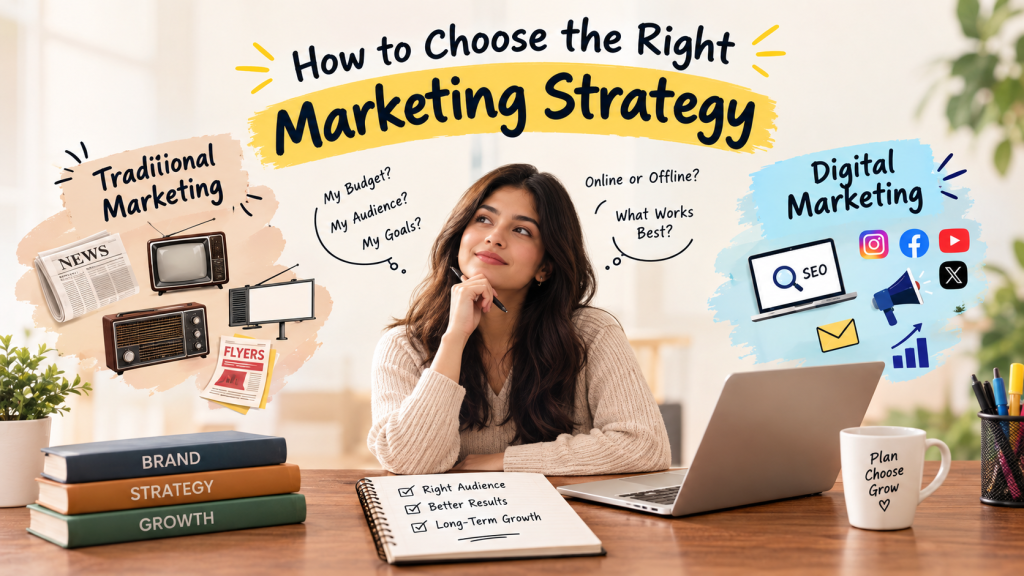
Before selecting digital marketing, traditional marketing, or a combination of both, consider these important factors:
1. Identify Your Target Audience
Understand your customers’ age groups, interests, location, needs, and preferred communication channels.
2. Define Your Marketing Goals
Decide whether you want to increase brand awareness, generate leads, drive website traffic, attract local customers, or increase sales.
3. Set Your Budget
Determine how much you can invest in campaign creation, advertising, tools, and ongoing management.
4. Choose Suitable Channels
Select marketing channels that match your audience and goals. For example, SEO may be useful for attracting people actively searching for information, while local outdoor advertising may help improve visibility in a specific area.
5. Measure Performance
Track relevant metrics such as website traffic, engagement, inquiries, conversion rates, and customer acquisition costs. For offline campaigns, use methods such as unique coupon codes, dedicated phone numbers, or customer surveys when practical.
6. Improve Your Strategy
Review campaign results regularly. Continue investing in methods that meet your goals and improve or replace those that do not perform well.
Frequently Asked Questions (FAQs)
1. What is the main difference between digital marketing and traditional marketing?
Digital marketing promotes products and services through internet-based channels such as websites, search engines, and social media. Traditional marketing uses offline channels such as television, radio, newspapers, flyers, and billboards.
2. Is digital marketing better than traditional marketing?
Neither method is always better. Digital marketing is useful for online engagement, targeted campaigns, and measurable results. Traditional marketing can be valuable for local visibility, physical promotion, and broad audience exposure. The right choice depends on your objectives and audience.
3. Is digital marketing suitable for beginners?
Yes. Beginners can start by learning social media marketing, SEO, content creation, email marketing, and digital advertising fundamentals. Practicing with small projects can help develop practical skills.
4. Which marketing method is more affordable?
The cost depends on the channel and campaign. Organic digital marketing can reduce direct advertising expenses, while some traditional methods, such as local flyers, may also be affordable. Businesses should compare costs with the results achieved.
5. Can a business use both marketing methods?
Yes. Combining digital and traditional marketing can help businesses reach customers through online and offline channels while maintaining consistent brand messaging.
6. What skills are needed to start a career in digital marketing?
Useful skills include SEO, social media management, content writing, graphic design, paid advertising, analytics, communication, and basic marketing strategy. Beginners can develop these skills through structured learning and hands-on practice.
Conclusion
Digital Marketing vs Traditional Marketing: Both methods help businesses promote their products, services, and brands. Digital marketing uses online platforms to reach specific audiences, increase engagement, and track campaign results. Traditional marketing relies on offline channels such as newspapers, television, radio, and billboards to build brand awareness and connect with local communities.
For beginners and small businesses, digital marketing can provide a flexible starting point. However, traditional marketing may still be effective for particular audiences and business objectives. In many cases, combining both methods creates a stronger marketing strategy.
The key is to understand your target audience, define clear goals, choose suitable channels, and measure the results. With the right approach, businesses can use digital marketing, traditional marketing, or both to build brand awareness, attract customers, and support long-term growth.
Learn more about digital marketing with ECH Academy and start building the skills needed to grow in the digital world.